Internet guides
How Much Internet Speed Does a Household Really Need?
Choose a connection around the way your household actually uses the internet.
Internet plans often advertise large numbers, but it can be difficult to know how those numbers relate to ordinary life. A household that watches television in the evening and checks email may have very different needs from one where two people work remotely and children play online games. Paying for the largest available plan is not always necessary, just as choosing the least expensive option may not always provide enough capacity.
The most useful starting point is to look at what happens inside your home when everyone is connected at the same time.
Download Speed, Upload Speed, and Latency
Download speed measures how quickly information reaches your devices. Streaming a movie, loading a website, and downloading a game all use download bandwidth. Upload speed measures how quickly your devices send information back, which matters when joining video meetings, sending large documents, or backing up photos.
Latency is the time it takes for information to travel across a connection. A high download speed does not necessarily prevent lag during a game or delays in a conversation. Connection stability matters as well, particularly for activities that cannot simply pause and buffer ahead.
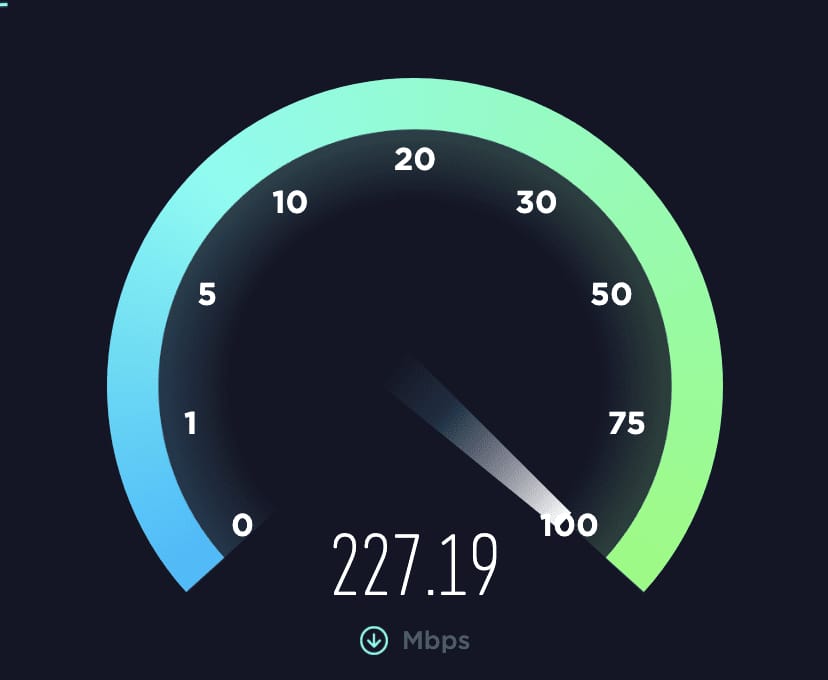
Internet speeds are generally measured in megabits per second, or Mbps. File sizes are often measured in megabytes or gigabytes. These units are different, so a 100 Mbps connection does not download 100 megabytes every second.
Start With the Activities You Actually Do
Basic browsing, email, and reading online documents usually require relatively little bandwidth compared with high-resolution video. Streaming services adapt their quality to available bandwidth, and their published recommendations differ. Netflix, for example, recommends a connection of at least 5 Mbps for full HD and 15 Mbps for 4K streaming.
A video meeting uses bandwidth in both directions. If another person starts a large upload at the same time, the meeting may become unreliable even when the household has plenty of download speed. Online gaming generally does not require enormous bandwidth during play, but downloading a new game can use much of the available capacity for an extended period.
Think About Everyone Being Online Together
Imagine a household with two televisions streaming in 4K, one person attending a video meeting, and someone browsing on a tablet. The two streams alone could need around 30 Mbps using the Netflix recommendations. Additional bandwidth would be needed for the meeting, browsing, and other background activity.
A connection that reliably delivers 50 Mbps download might handle this example if its upload capacity and stability are sufficient. A 100 Mbps plan would provide more room for simultaneous activities. Neither number guarantees a smooth experience because actual speeds, wireless coverage, and network conditions can change.
For a household with heavier simultaneous usage, a faster plan may be worthwhile. The goal is to leave reasonable headroom instead of purchasing a connection that must operate at its limit whenever everyone is home.
A Faster Plan Is Not Always the Fix
If your laptop performs well beside the router but struggles in a bedroom, the problem may be wireless coverage rather than the internet plan. Moving the router or improving the home network could be more useful than purchasing additional bandwidth.
Similarly, a connection that frequently drops or has inconsistent latency may not improve simply because its advertised maximum speed increases. Test the connection at different times and in the rooms where you normally use it. Compare wired and wireless results if your equipment supports both.
Do Not Forget About Data Usage
Speed describes how quickly data moves, not how much data you are allowed to use. A household that regularly streams video or downloads games may consume substantial amounts of data regardless of the speed of its connection. Check for data allowances, usage policies, and any associated charges when comparing plans.
Unlimited plans may remove a fixed data allowance, but they can still have network management terms. Understanding those terms before subscribing helps you compare the experience as well as the monthly price.
Choose a Plan That Fits Your Household
Write down the activities your household performs regularly, identify which ones happen together, and consider whether your current connection supports them comfortably. If you work remotely, pay particular attention to upload performance and stability. If streaming is your priority, consider the number of screens and preferred video quality.
GetUnlimitedWiFi encourages households to compare internet options based on everyday needs rather than the largest advertised number. Read our guides to slow WiFi and cellular home internet for more information about choosing a connection and making the most of it.
References
Netflix Help Center. Internet connection speed recommendations. https://help.netflix.com/en/node/306